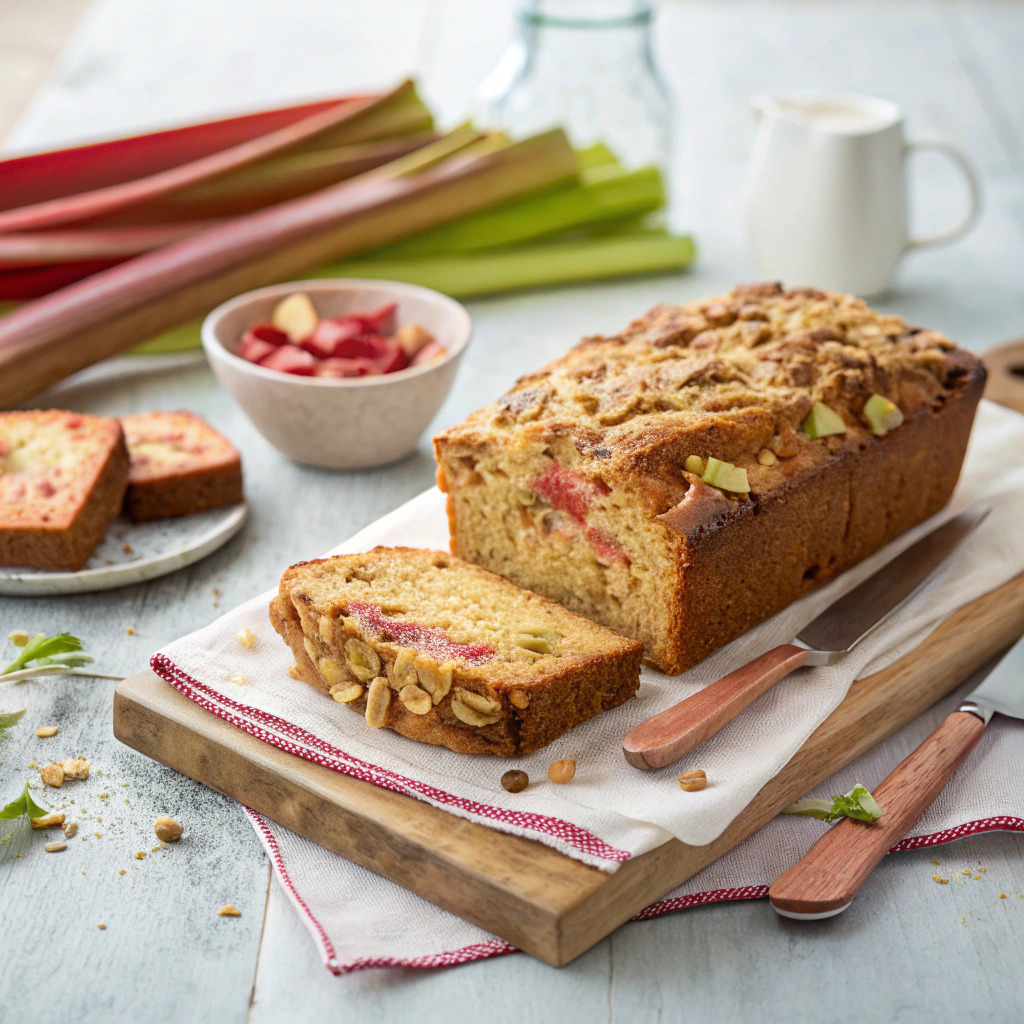
Rhubarb bread is a delightful blend of tart and sweet flavors, perfect for breakfast or an afternoon snack. This moist loaf showcases the unique taste of rhubarb, paired with the comforting essence of a homemade bread. It’s a seasonal treat that brings a taste of spring into your kitchen.
What's the Big Deal?
This recipe for rhubarb bread stands out for its ability to balance the tartness of rhubarb with the sweetness of sugar, creating a deliciously moist loaf. The addition of cinnamon and vanilla enhances the flavor profile, making each slice a delightful experience. Rhubarb, often overlooked in desserts, shines as the star ingredient in this bread, offering a unique twist that will impress family and friends. This bread is not only a great way to use fresh rhubarb when it's in season, but it also freezes beautifully, allowing you to enjoy the taste of spring even in winter. Baking this bread fills your home with a warm, inviting aroma that will make it hard to resist diving into a slice straight from the oven.
Your Kitchen Arsenal
To make rhubarb bread, gather the following equipment.
- A large mixing bowl for combining ingredients
- A whisk for blending dry ingredients
- A spatula for folding in the rhubarb
- A loaf pan to shape the bread
- An oven for baking
- An oven thermometer to ensure proper temperature
- A cooling rack to cool the bread after baking. Having these tools at hand will streamline the process and ensure your bread turns out perfectly.
Tricks of the Trade I Swear By
For the best results, use fresh rhubarb, as it provides the best flavor and texture. If using frozen rhubarb, do not thaw it before adding to the batter to prevent excess moisture. Ensure that all ingredients are at room temperature before mixing, which helps in achieving a light, fluffy loaf. When measuring flour, spoon it into the measuring cup and level it off, avoiding packing it down. Always check the internal temperature of the bread to ensure it has reached 190°F for doneness. Allow the bread to cool in the pan for a few minutes, then transfer it to a cooling rack to prevent sogginess. Remember to wash your hands and all surfaces that come into contact with raw ingredients to maintain food safety.
Recipe Card

Ingredients
- 2 cups rhubarb, diced (fresh or frozen)
- 2 cups all-purpose flour
- 1 cup granulated sugar
- 1 teaspoon baking powder
- 1 teaspoon baking soda
- 1 teaspoon cinnamon
- 1/2 teaspoon salt
- 1 cup vegetable oil
- 3 large eggs
- 1 teaspoon vanilla extract
Instructions
- Preheat the oven to 350°F and grease a loaf pan. In a large mixing bowl, combine the flour, sugar, baking powder, baking soda, cinnamon, and salt. In another bowl, whisk together the oil, eggs, and vanilla extract. Gradually add the wet ingredients to the dry ingredients, mixing until just combined. Fold in the diced rhubarb gently. Pour the batter into the prepared loaf pan and smooth the top. Bake for about 60 to 70 minutes, or until a toothpick inserted into the center comes out clean. The internal temperature should reach at least 190°F. Allow the bread to cool in the pan for 10 minutes before transferring to a cooling rack.
Storage Instructions
Store any leftovers in an airtight container at room temperature for up to three days, or refrigerate for up to a week. This bread also freezes well for up to three months.
Make It Your Own
Consider adding chopped nuts or chocolate chips to the batter for added texture and flavor. For a spiced version, incorporate nutmeg or ginger alongside the cinnamon. If you prefer a sweeter bread, increase the sugar slightly or add a drizzle of icing on top once the bread has cooled. You can also experiment with different types of flour, such as whole wheat for a heartier loaf. For a vegan version, substitute eggs with applesauce and use a plant-based milk instead of dairy.
Goes With
Slice the rhubarb bread while it’s still slightly warm for the best texture. It can be enjoyed plain, but a spread of butter or cream cheese adds a delightful richness. Serve it alongside a cup of tea or coffee for a perfect afternoon treat. This bread also makes a wonderful gift, wrapped in parchment and tied with twine, showcasing the beautiful color of the rhubarb.
Disaster Recovery
| Problem | Solution |
|---|---|
| The bread is too dense. | Ensure you are not overmixing the batter, as this can lead to a dense texture. Also, check that your baking powder is fresh and active. |
| The bread is undercooked in the center. | Make sure to bake the bread long enough, and if necessary, cover the top with foil to prevent over-browning while the inside continues to cook. Use a toothpick to check for doneness; it should come out clean. |
| The rhubarb is too watery. | If using frozen rhubarb, do not thaw it completely before adding it to the batter to minimize moisture. |
| The bread has a burnt crust. | If the crust is browning too quickly, lower the oven temperature slightly and extend the baking time. |
| The flavor is too tart. | Adjust the sugar in the recipe to balance the tartness of the rhubarb to your taste. |
Reader Questions Answered Here
Can I use frozen rhubarb?
Yes, but do not thaw it before adding to the batter.
How can I tell when the bread is done?
A toothpick inserted should come out clean and the internal temperature should be 190°F.
Can I make this recipe gluten-free?
Yes, substitute all-purpose flour with a gluten-free flour blend.
What should I serve with rhubarb bread?
It pairs well with butter, cream cheese, or simply enjoyed plain.
How long does this bread last?
It will last up to three days at room temperature or a week in the fridge.