
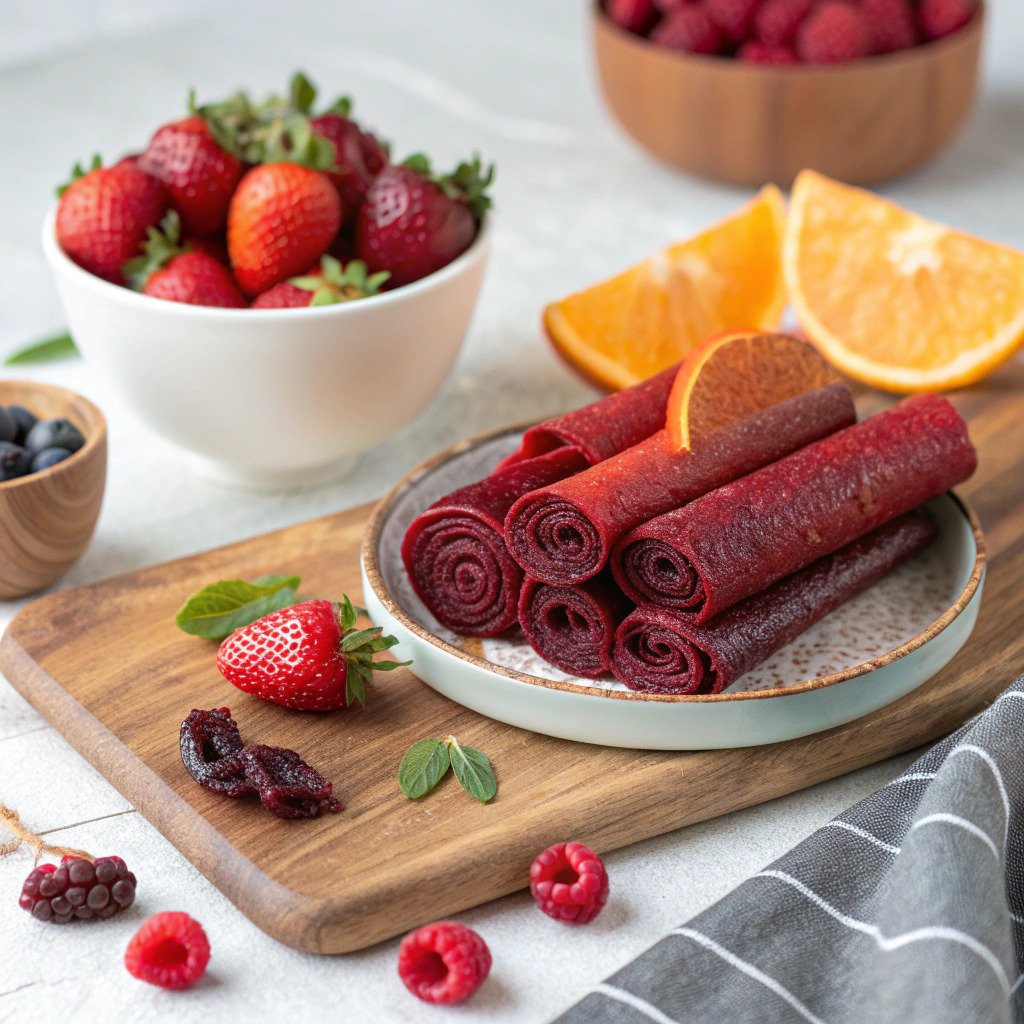
Experience the delightful sweetness of homemade fruit leather, a healthy snack that is perfect for both kids and adults. This fruit leather recipe captures the vibrant flavors of your favorite fruits and transforms them into a chewy treat that you can enjoy anywhere.
Why This?
Creating your own fruit leather is not only a fun activity but also a great way to use up overripe fruits. This fruit leather recipe is versatile, allowing you to mix and match different fruits to suit your taste. Unlike store-bought options, homemade fruit leather contains no added preservatives or artificial flavors, making it a healthier choice for snacking. The process is simple and requires minimal ingredients, yet the results are incredibly satisfying. Once you taste your own homemade fruit leather, you'll be inspired to experiment with various flavor combinations, ensuring you have a nutritious snack on hand anytime.
Fruit leather can be enjoyed as a quick energy boost, a lunchbox treat, or even a hiking snack. It’s easy to make and can be customized to your preference, whether you prefer a tart apple flavor or a sweet berry burst. This recipe is not just about making a snack; it’s about creating something wholesome that brings joy and health to your diet.
Hardware
To make fruit leather, gather the following equipment:
- a blender or food processor for pureeing the fruit
- a baking sheet or dehydrator tray to hold the fruit puree
- parchment paper to line the baking sheet
- an oven or dehydrator for drying the fruit leather
- a spatula for spreading the puree evenly. Having the right tools will streamline the process and help you achieve the best texture and flavor in your finished product.
Little Things That Make a Big Difference
For optimal results, choose ripe, fresh fruits as they will provide the best flavor and sweetness. Wash the fruits thoroughly before processing to remove any dirt or pesticides. When blending, you may add a small amount of lemon juice to enhance the flavor and help preserve the color of the fruit. Safety is crucial; ensure that the fruit leather is heated to an internal temperature of at least 165°F during the drying process to eliminate any harmful bacteria. Once dried, allow the fruit leather to cool completely before storing it in an airtight container to maintain freshness. Keep in mind that fruit leather can be sticky, so using parchment paper will help prevent it from sticking to surfaces.
Recipe Card

Ingredients
- 2 cups fresh fruit (such as strawberries, apples, or peaches)
- 1 tablespoon lemon juice (to enhance flavor and preservation)
- optional honey or maple syrup (for added sweetness if desired)
Instructions
- Preheat the oven to 140°F or prepare the dehydrator according to the manufacturer's instructions.
- Wash and chop the fresh fruit, removing any seeds or pits.
- In a blender or food processor, puree the fruit until smooth, adding lemon juice and sweetener if desired.
- Line a baking sheet with parchment paper and pour the fruit puree onto the sheet, spreading it evenly with a spatula to about 1/8 inch thickness.
- Place the baking sheet in the oven or dehydrator and let it dry for about six to eight hours, checking periodically for doneness.
- The fruit leather is ready when it is no longer sticky to the touch and can be peeled easily from the parchment paper.
- Once dried, remove from the oven and allow it to cool completely before cutting into strips or shapes.
- Store the fruit leather in an airtight container at room temperature for up to a week or in the fridge for longer shelf life.
Storage Instructions
Store in an airtight container at room temperature for up to one week. For longer storage, refrigerate.
Your Way
There are numerous variations you can create with this fruit leather recipe. Experiment with different fruit combinations like mango and pineapple for a tropical flavor or mix berries with a banana for added sweetness. You can also try adding spices such as cinnamon or ginger for an extra flavor kick. For a tart version, incorporate citrus fruits like oranges or lemons. If you want to add a little texture, consider mixing in finely chopped nuts or seeds. The possibilities are endless, and each variation will provide a unique taste experience while keeping the healthy aspect intact.
Table Ready
Once the fruit leather is dried and cooled, you can cut it into strips or shapes as desired. Serve it as a nutritious snack during movie nights, pack it in lunchboxes for a tasty treat, or enjoy it on hikes for energy. It pairs wonderfully with yogurt or can be crumbled over oatmeal for added texture and flavor. This healthy snack is not only delicious but also visually appealing, making it a hit with kids and adults alike.
Rescuing Recipe Fails
| Problem | Solution |
|---|---|
| The fruit leather is too sticky and difficult to remove from the parchment paper. | Ensure that the fruit leather has dried thoroughly before attempting to remove it. If it is still sticky, continue to dehydrate for additional time. |
| The flavor is too bland. | Consider adding natural sweeteners like honey or maple syrup during the blending process, or mix in spices to enhance the overall taste. |
| The leather is not drying evenly. | Make sure to spread the fruit puree evenly on the baking sheet or dehydrator tray and avoid making it too thick in certain areas. |
| It smells burnt. | If using an oven, check the temperature and reduce it if necessary. It should not exceed 140°F for drying fruit leather. |
| The finished product is too chewy. | This could be due to insufficient drying time. Ensure that the fruit leather is completely dehydrated before removing it from the heat source. |
Everything You Want to Know
Can I use frozen fruit for this recipe?
Yes, frozen fruit can be used; just thaw and drain excess liquid before pureeing.
How do I know when the fruit leather is done?
The fruit leather should be dry to the touch and no longer sticky before removing it from the oven.
Can I add vegetables to the fruit leather?
Yes, pureed vegetables like carrots or sweet potatoes can be added for added nutrition.
What types of fruit work best for fruit leather?
Fruits that are naturally sweet, such as strawberries, mangoes, and apples, work best.
How should I store leftover fruit leather?
Store it in an airtight container at room temperature or refrigerate for longer shelf life.