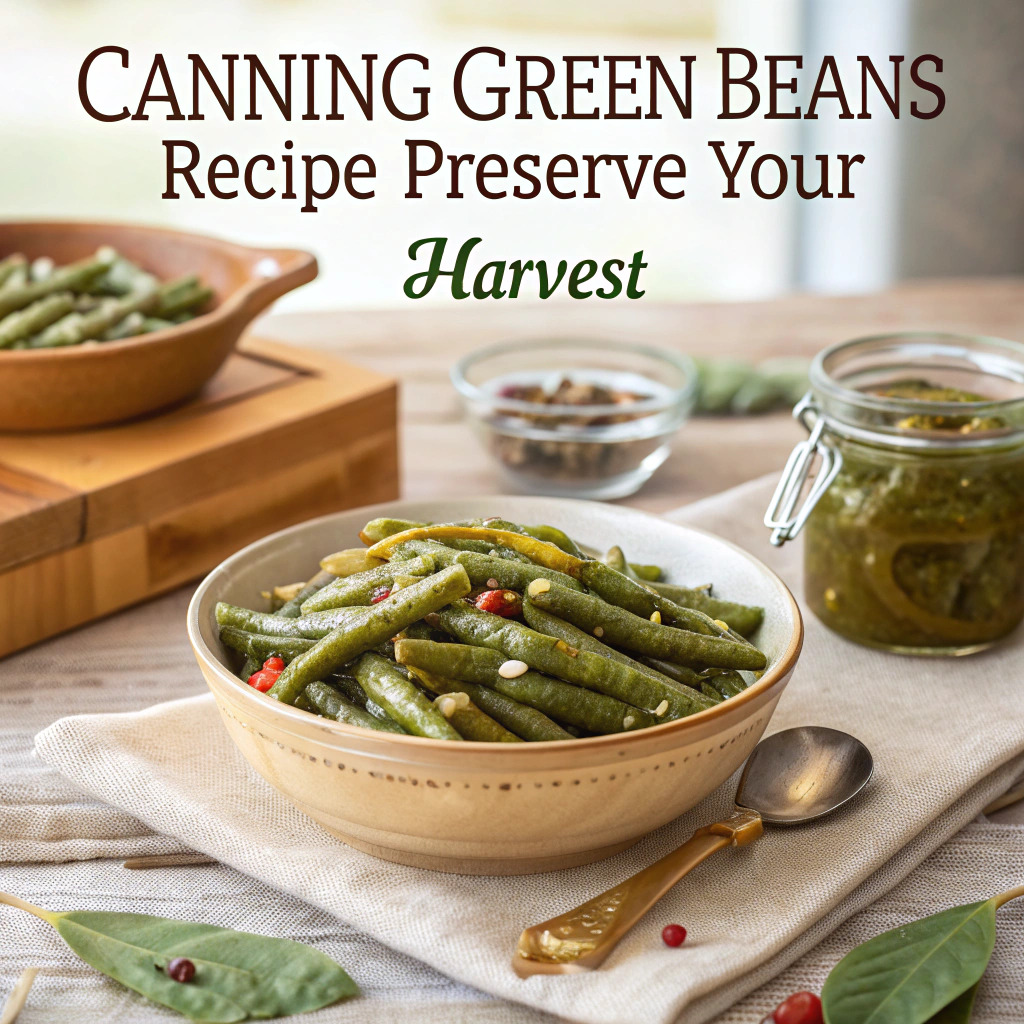
Canning green beans is a fantastic way to preserve the freshness of your harvest and enjoy their vibrant flavors throughout the year. This method not only ensures you have delicious green beans on hand but also allows you to take pride in your home canning skills.
Here's What Makes This Special
This recipe for canning green beans is special because it captures the essence of summer in a jar, allowing you to enjoy the taste of freshly harvested beans long after the growing season has ended. Canning is a traditional method that not only preserves food but also retains its nutritional value, making it a healthier choice than many store-bought options. You’ll appreciate the crisp texture and bright color of the beans when you open a jar in the middle of winter, reminding you of sunny days. Using the water bath canning method ensures safety by destroying harmful bacteria and sealing the jars for long-term storage. With just a few ingredients and some careful preparation, you can create jars of vibrant green beans that will be a staple in your pantry. Follow the steps closely to ensure proper preservation and safety.
Gather These
To successfully can green beans, you will need several key pieces of equipment.
- Canning jars with new lids for sealing
- A large pot or canner for boiling the jars
- A jar lifter for safe handling
- A ladle for filling jars
- A funnel for easy pouring
- A clean cloth for wiping jar rims
- A timer for monitoring processing time. Having these tools ready will streamline your canning process and ensure a safe and efficient experience.
Know Before You Go
Before you start canning green beans, wash your hands and ensure all equipment is clean and sanitized. When selecting beans, choose fresh, firm, and crisp green beans without blemishes. Trim the ends and cut them into uniform sizes for even cooking. It’s essential to process jars at the recommended pressure and time to ensure that the beans reach a safe internal temperature, as under-processing can lead to spoilage. Always check for any signs of spoilage, such as bulging lids or off-smells, before consuming your canned goods. Store jars in a cool, dark place and check seals after processing to ensure they are airtight. If a jar doesn’t seal properly, refrigerate and use the contents within a few days.
Recipe Card

Ingredients
- pounds fresh green beans (trimmed and cut to desired length)
- tablespoons salt (optional for flavor)
- water for boiling (filtered or tap water)
Instructions
- Wash and trim fresh green beans, cutting them into uniform lengths. Prepare your canning jars by washing them in hot soapy water and rinsing well. Place the jars in a boiling water bath to sterilize them.
- In a large pot, bring water to a boil. Blanch the green beans for about three minutes, then immediately transfer them to an ice bath to stop the cooking process.
- Once cooled, pack the green beans tightly into the sterilized jars, leaving about an inch of headspace at the top. If desired, add a tablespoon of salt to each jar for flavor.
- Pour boiling water over the green beans in the jars, ensuring they are fully submerged and maintaining the headspace. Wipe the rims of the jars with a clean cloth to remove any residue.
- Seal the jars with the lids and place them in a water bath canner. Ensure they are covered with water by at least an inch. Bring the water to a boil and process for 20 to 25 minutes depending on your altitude.
- After processing, remove the jars and allow them to cool completely on a clean towel or cooling rack. Check the seals after 24 hours and store any unsealed jars in the refrigerator.
Storage Instructions
Store sealed jars in a cool, dark place for up to one year. Once opened, refrigerate and use within a few days.
Different Spins
Consider adding spices or flavorings to your canned green beans for a unique twist. Garlic cloves, dill, or red pepper flakes can enhance the flavor profile. You can also experiment with different types of beans such as yellow wax beans for added color. For a more gourmet option, pack the jars with a sprig of fresh herbs or a slice of lemon for a refreshing taste when opened later. These variations can elevate your basic canned green beans into something special.
Plate It Up
Canned green beans can be enjoyed straight from the jar, or you can incorporate them into a variety of dishes. Mix them into salads, casseroles, or stir-fries to add a burst of color and nutrition. They also make a great side dish when heated with a little olive oil, salt, and pepper. For a comforting meal, combine them with sautéed onions and garlic, and serve alongside grilled meats or roasted chicken.
Troubleshooting Guide That Actually Helps
| Problem | Solution |
|---|---|
| Jars did not seal properly. | Ensure the rims of the jars are free from residue before placing the lids on. If the jars do not seal after processing, refrigerate and use the contents within a few days. |
| Beans are too soft after canning. | Use fresh, crisp beans and avoid overcooking them before canning. Process jars at the correct temperature and time to maintain their texture. |
| Cloudy liquid in jars. | This can occur if beans are not pre-blanched properly. Always blanch beans for a few minutes before packing them into jars to prevent cloudiness in the liquid. |
Q&A
Can I use frozen green beans for canning?
It's best to use fresh green beans for canning as frozen beans may not retain their texture.
How long can I store canned green beans?
Canned green beans can be stored for up to one year in a cool, dark place.
Why is it important to blanch green beans before canning?
Blanching helps preserve color, texture, and nutritional value while also reducing the risk of spoilage.